

 Apple Podcasts
 Amazon Music
 Castro
 Spotify
 RSS Feed
 iHeartRadio
 Stunning Scenery, Towering Cliffs, a Beautiful Oasis and Wonderful Hospitality: Visit Todra Gorge
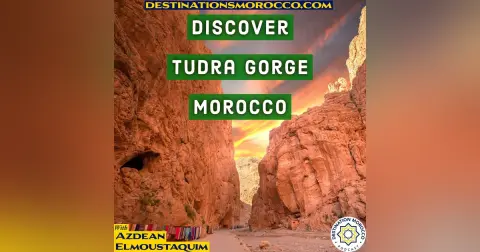
East of Marrakech... Over the High Atlas Mountains... Lies a stunning gorge of towering cliffs and a brilliant green oasis. Todra Gorge. Follow the Todra River as it winds its way out to the valley floor, and the town of Tinghir. It is here you will find the Riad Bab Todra, a beautiful, comfortable and modern family-owned accommodation that is a perfect base for exploring this stunning area of Morocco. Azdean sat down with Mr. Tayib, riad manager, to learn about the area, activities, cultural...
East of Marrakech...
Over the High Atlas Mountains...
Lies a stunning gorge of towering cliffs and a brilliant green oasis.
Todra Gorge.
Follow the Todra River as it winds its way out to the valley floor, and the town of Tinghir. It is here you will find the Riad Bab Todra, a beautiful, comfortable and modern family-owned accommodation that is a perfect base for exploring this stunning area of Morocco.
Azdean sat down with Mr. Tayib, riad manager, to learn about the area, activities, cultural highlights, distinct food and clothing, best time to visit and how Bab Todra came to be built just a few years ago.
Enjoy modern amenities and comfort that sits on the doorstep of some of Morocco's most dramatic landscape, a perfect stopping point halfway between Marrakech and Merzouga Desert.
But if you have the time, turn the Todra area into its own destination! From hiking and adventure activities to relaxation and cultural immersion, Todra is slowly and steadily becoming a more popular and developed area for tourism.
Come explore before the crowds arrive!
Welcome back to another amazing episode of Destination Morocco Podcast. We're having an episode all the way from Tudra Valley with an amazing, amazing guest, Mr. Tayib. Yes. Welcome to our podcast. Thank you so much. . Pleasure to have you two in here. Thank you. Thank you. Mr. Tayib, would you please tell us a little bit about yourself? We sat down earlier and you have Tayeb. I come from the southern part of Europe. And my family was born and raised here, but we cannot live any longer there because of the drought that the desert of Noruka have cut for many years. And I believe we moved here in 1981. Ah wow. 1981. That's when we moved here to have a better life. In the town of Tinghir. Tinghir. That's amazing. This town is called Tinghir. It has a very rich valley to visit. And it has one of the most beautiful hotels in town. It's called Ria d Bab Tudra, as you can see, where you are staying at. Absolutely. And this valley is very rich because we have had a lot of Berber Jewish Moroccans who lived in this town. They are very famous for the old Kasbah where the Jewish people lived at. I see. So can you tell us a little bit more about your background? I'm sure the Khadka, Reb Shuiya. My background, we used to be my parents, you they used to be very big traders in the southern part of Morocco. I see. And they used to trade very old things from here all the way to Algeria because we are not far away from Algeria from here. And they used to trade very old blankets, carpets and herbs. But no more because the borders in Algeria now are closed for security reason. Yes. The Algerians cannot come here and the Moroccan cannot go. And as you know, since 1975, that's when we had the Green March of Morocco. Absolutely, absolutely. So we are here at Todra. It's really, really nice. It's amazing. And I also see in the back, when you look out, there's you know just the wilderness, it's beautiful trees, it's very quiet, soothing. So if somebody's coming to stay here with you, how many days would you recommend? Well, for this place, really the best. And if a person is able to stay more than one night is better. Because you get to you get to explore the palmery, the palm grove which is behind us. You can walk and it's all day long. It's very beautiful. And it's very rich in trees. You have different kinds of trees. Yes. And or or you can go to the mountain, you get to see how the Berber people live in caves with their children, with their goats. This is really what Morocco is about. These places are very nice to see. And the owner of this hotel, Muhammad. Bab Tudra, he does lots of trekking and is very good with it. You walk for about six, seven hours. You take your breakfast with you before the sun rises and you start walking. You cannot believe how magnificent the landscape in this area. Perfect. So uh this place, riad Babjudra, it's nice if the people are able to stay more than one night. I see. Okay. So let's say somebody stays here for two days or three days or even four or five days. What are some of the activities that the next they can expect to do here at riad Tudra? Oh, the activities there are many. You can walk from here to the Tudra Valley. Sometimes people when they are a healthy good condition, they can rent donkeys. I see. You understand? Healthy donkeys, and they go through the valley on a donkey and they have lunch in the Palmarie. Very peaceful. Or they can go trekking to a village which is about 27 kilometers away from here. It's called Temtatusht. Tem Tatusht, it's a Berber village which is very beautiful also in the winter time. When it snows, the whole village is full of snow. It's very beautiful. So 27 kilometers, obviously it's gonna be hard for anybody to walk. Well, you have people who walk for walking through this valley, you have to be in good condition, yeah. You have to fit, you have to be really in that you have to be able to walk because there are no space. I mean it's not very hard walk, it's very easy walk to do. It's not very hard. I see. Okay, so I'm gonna change the subject for a little bit. I've we just had lunch here. Yes. It's very nice. The food is very different. Yes. Everywhere we have stuff, they have their food is different. And we have some salad and vegetables, but they look a little different. The colors stand out in a way. So everything that we just ate, especially the vegetables, are they grown inside? Oh, most of the vegetables are homegrown. They're grown locally. Here. Locally here. You know, they are local garden where you pick your vegetables and you bring them to the hotel. You know, they are beautiful, you understand? Organic. Organic. They're organic. Okay. That makes sense. So how many suites do you have? We have two suites, two suites, and uh six rooms. Six rooms. We have double room, triple rooms. And all have air conditioned because in the summertime it's quite hot, even if it's cooler in here. But people in the room they like to have air conditioning. Of course. Of course. Yes. So basically, in terms of food, you have no waste. Oh, we don't try to waste. It's not good to waste. Yes. It's not good to waste. And uh we really, when you have uh the capacity of 10 rooms, there is nothing you can waste. Yeah, for sure. You know your clients, how many people you have, so you know how much food you need to get, you know, exactly to find the people. Okay, perfect. Perfect. What else can you tell us about that Bab Tudra and also about the owner? Well, this the whole hotelry at Bab Tudra was built seven years ago. So it's pretty new. It's pretty new, but it's nice. It's isolated from the whole city. Yeah. And it's peaceful. As you can see, how we are sitting here, it is no noise, less like a big city where you have lots of noisy. And it was built seven years ago by Mohammed. And uh Mohammed is someone who also has grown in the tourism industry. So it's not like anyone who just outsider. An outsider. He built it with the charm, with the good feeling. He likes he likes what he does. You understand? He likes about what does he do with passion. And he knows the surrounding very well. He knows the surrounding very well, as weird as the desert. He's really very talented person, uh concerning the entourage, the area, how he goes. Yeah. So the neighborhood, the location, and everything else that goes with it. That's really, really interesting. I've seen pictures of this place many, many, many times. But nothing is the same as us sitting here and looking at this beautiful, beautiful, beautiful setting. It's just gorgeous. It's very nice. Yeah, it is very nice. So for people who want to stay with you, how can you how can they get in touch with you? How can they find you? Well, there is uh a website and there are a travel agency which they contact us and we confirm reservation for them. Okay. There is what's a mile. What's a slow season for you, or what is the big the busy season? Well the slowest season for us now, I think, is in August. Because I guess in the southern part of Morocco is nickel bit hot. Yeah. And most of the people they like to go to the sea. We still get some clients in August, but August is okay. And what's your busiest month? Uh September, October, September, October, November, December, and during Christmas time, it's always busy. So it's when the temperature is cool, when the temperature is icy. But even if when I say the temperature is hot, it's not really hot when you are in the shade. Of course. If you go out in the sun, you'll feel it. You feel it. But you you can see now it's hot outside. If you go walking in the sun, it's hot. But in here it's much cooler. Yeah, here we're very comfortable. That is true. Can you give us some of those experiences, some of those things that uh like me, I cannot really walk for a long distance. My foot hurts. But what are some of the things that I might be interested in, or somebody like me might be interested in? In here, you might be interested in is to go to the local hammam. Ah, folks. Oh, for sure. I mean, there are many hammam in all over the country. Yes, yes. But the local hammam in here, with the Berber people, it's nice to be and have a nice cream experience. Local cream by the women. Walk us through that experience because I'm not familiar with it. Local hamam in here we have a section for one section for men, one section for women. And when you go inside of it, of course, as you know, in Morocco traditions tradition, someone who comes, rubs you and pulse. Yes. Yeah. Yeah. The black soap. The black soap, we call it la soul and so on. But I mean, there are hamam all over Morocco. Just for me, in my opinion, when people come here and stay for a few days, when they get a nice hamam and sit by the palmy, it's they love it. For sure. It's really nice with cold drinks, it it's amazing. You know, it's it's funny. I go back and forth to Morocco for a long time, and I used to love going to Hammam. Hamam is the best, the neighborhood Hammam every other day. And I stay there for 10, not even 15 minutes, and I'm out. But the experience is really cool, it's unique. It is very unique and you know, no matter uh any shower you can take, but the hamam stays is how you have to. It's a top, it's really good. Absolutely, absolutely. But uh the other question that I have, please here, is where does the name Tudra come from? Because we hear this Tudra, this Tudra, this is named after a Berber Jewish Moroccan. I say. Berber Jewish Moroccan, because his name? Tudra. Tudra is after a Berber Jewish Moroccan. They named her because of the river, because the Jewish people in this town. The most important thing for them to be near is the water. For sure. And that's why they call them the the valley, it was full of water, and they name it after Tudra, because Tudra was a queen during I don't know how many years ago when the Jewish lived in here. There is also another village which is called Asphalu. Asphalu is where the Jewish local one local Jews lived. Asphalu, very beautiful. They still have the synagogue. But the Tudra Valley is named after the. What does Asphalu mean as well, since we're talking about names? And where is it uh distracted from? Because there's always Asfalto. Jewish Jewish. Can you explain that to the people? Asfelu is a Jewish name where then the Jewish because each village is where the Jewish lived, they have different names. Yes. Asfelu means means peace for call. As falo. Okay. Peace. Yes. Cold and cold and peace. Yes. Cooliness and peace. Yeah. Coolness and peace. Coolness and peace. Okay. Okay. Afilah. Up afila. As fellow. Yeah, I want the audience. Thank you so much. Thank you for clarifying that. You are welcome. And also we are in Tinghir. I understand Tinghir is the probably the biggest village in Morocco. It should be named a city than just a village because it's massive. Can you tell us a little bit of history about Tinghir? Well, Tinghir is a city which used to belong to all the Berber Moroccans. It's known as a Berber village. If you go, Tinghir. Tinghir is a Berber Moroccan village. Tinghir. Tingir. Okay. So the name comes from the Berber name of shoulder. Shoulder. Nice. And this is now. This is very indication of. Because this name that you have in these villages in the southern parts of Morocco, each village with its own names has a meaning. Oh for sure. That's that's exactly why that's the meaning. And for getting the exact meaning of these towns in the southern part of Morocco, the most famous people of now and it is the elder people. Of course. Of course. Because we young generation, we can see this and this. But the elder people they know exactly why they named this village Tiniri. Why did they name this vill this village Asfellow? Or why did they name this valley Tudra? If you go, for example, to Zagura. Yes. You know Zagura from Ouarzazate. You have the Dra Valley. Yeah. This is Tudra Valley. It's different. Some people get confused. They think it's the same, but it's not the same. But each village has a name, and these names have meaning. 100%. That's what's nice about the southern parts of Morocco. Yeah, there's always something new. And they have history, of course. Of course. Speaking of history, what can you tell us about this region's history, Mr. Tayib? Well, this region's history is an isolated area of Morocco because nobody really wants to be here except the tourism. You're Barbara, you are because it's not compared to big cities like Marakech. But the landscape in here, the people, the atmosphere is very beautiful to see and be at. Okay. What I wanted to share is this is one of the reasons why we're doing this. You know, there's a team behind me that takes all the credit, but I know the hard work that it takes. We want to show this part of Morocco, this beautiful, beautiful part of Morocco that I totally agree with you, but it's almost unseen, unrecognized, and extremely underappreciated. Yes. I mean the scenery changes for five minutes to five minutes and something the landscape. And what's so nice about the landscape, and if you make one remark in here, one remark in here, the dress of the people, yes, the local people of each town is different. Different, that's why. Do you understand? 100%. So if you go, for example, to Skurao, 70 kilometers away from here, the dress of the ladies is different than the local women. Exactly. If you go to Tefilele's area more south, the dress is different. If you go to Chingad, the dress is different. Changed. As well as the landscape, the color of the mountain, the ground, it's so different. The clothing of the people, the men. The culture, the two cultures are very different. Yeah, that's that's when we talk about Morocco, when we talk about diversity, this is these are the best places to see it. People don't get bored. Because you drive 50 kilometers away from and they give you a very simple example. If you were in Marrakech and you drive to Issawana, how do women dress their things with the think who on their head and the the the show? The shawl, yeah. The shoal they wear. It's different. It is different. And in Marrakesh it's different. They have just Labia, yeah. Labayah is Labia for women. That's what's nice about Morocco. Each region is so different. And people, the tourists, they don't get worn. They like to see, they enjoy it. But the funny thing is a lot of tourists, they don't they see us, all of us as Moroccans, but then when they do a tour like this, they change from city to city to village to a casbah and so forth and so forth. They realize Morocco is a lot more diverse than then they first part. So that's what makes really Morocco special, but also that's what makes the south and this area very special about Morocco because again, a lot of people don't come through here comparing with the itineraries that are on the north side of Morocco, Fas, Casablanca, Chefchaouen, Tangir, and so forth and so forth. I wish the South is a little bit more known, so and I wish it it did get a little bit more credit than it deserved, but unfortunately, it's not. Uh I don't know if it's ever gonna be equal. Maybe not, but what we do is we want to showcase the diversity of Morocco. We want to showcase the beauty, the hospitality of people like you, Sitaib, of riads like this one. Thank you, riad Dara, uh Beba. It's a pleasure having you. Oh, absolutely. Thank you. What you are doing, it's something which is very special and just to give you a lot of congratulations. Thank you, thank you. Congratulate you because not many people who get to do this kind of uh make an offer of giving the country an idea of how it is. Yes, yes. I would appreciate that. Thank you, sir. I will appreciate that. And we appreciate you as well because your hospitality is just it's it's second to none. It's just well, you see the hospitality is not just mine. The hospitality is in the country, of course. The Moroccan hospitality is something which is very unique, no matter where you go. Yeah, yeah. Some people, even if they haven't got anything to give you, they will say, Would you like to have a glass of water? You understand, which is very imminent. And this is very special. You don't have many countries who make this up. Another thing about the hospitality in this area, especially in Tinery, during Friday, you would be walking in town and you find people sitting together for crosscools. Yes, that's right. That's right. It's one of the oldest traditions, which is really good. It is, it is. Mr. Tayu, this has been one of the best experiences for me. It's a pleasure. It's a pleasure. And I noticed that your English is a little bit unusual. What's the story behind your English? There's no way you can tell me I learned this on my own. Well, you see, I speak English because I like to talk in English. I mean, it's just and the language is a weapon. And do you understand? If you have if you are able to speak a language, you are able to communicate with other people. Absolutely. I like to talk in English. I speak many other languages as well. Can you can you tell the audience what type of languages do you speak? I speak French, I speak English, Arabic, German. And I get to buy with other languages like Italian and Spanish and yes. Because I grow up in this atmosphere to know and to understand other people. On a melting region, but it's yeah, it's the average person speaks a few languages and your English is just really, really, really good. Thank you. Okay, awesome. So the question that I have is actually is there anything else that you would like to share with the audience as we're getting close to finishing this episode, this incredible episode? Well, what can I say? It's really nice to share this moment with you by telling you a little bit about our area and about our people who live here, and it's really nice having you here. Thank you so much. You are very welcome. You know, the funny thing is um I think about today, think about yesterday, I think about the day before yesterday, and when we started the tour. You know, us as a tour operator, we are a small company. But the thing is we always want to learn. You know, we're Moroccans, we're very proud. Yes, of course. And we think we know that by coming here, we believe we know a lot less than that. It's never enough. It's never enough. And we learn everything, something new from you, from the other wonderful people that we have um an episode with, and we're just a chit-chat. There's so much more to Morocco than what everybody thinks or sees Morocco as. Yeah. Um it's just thousands and thousands of layers of history. You cannot cover it in one episode, you cannot cover it in one day, one week, one month. It takes a little time, but it's better than nothing. For sure. For sure. It takes it's when you do just a small and bit a small bit, it's better than nothing. I completely agree. I can smell the next cafe on the coffee. It's a really good coffee. The best, yeah. Very nice. I really like it. You know, with us, even when we plan, um we think one day, two days are enough. But obviously learning today that it's really not enough, and there's a lot more can be done here than we originally thought. And when we build an itinerary, we build it specifically to what the guest wants. But now I feel that we have a lot more knowledge, a lot more experience. Our network has gotten bigger, and we can make more recommendations for them instead of you know we have five options for you, now we have ten or fifteen options for you to choose from and see if we can expose this beautiful part of Morocco as much as we can. InshaAllah. InshaAllah. Mr. Taiv, thank you so much. It has been a pleasure. It has been a pleasure. We hope to see you again with much more pleasure. Forget to spend the evening here, you will see the place much more. Absolutely better. It feels very hot outside, but here it's really the wind blows. Yes. The wind blows. Excellent. Thank you. Shukrande. Thank you so much. You're welcome. Thank you. And thank you for the one. That wraps up today's episode. If your clients are asking you about Morocco, we're here to make sure you always have the answers. We work directly with travel advisors, just personal attention to details and custom itineraries. You could reach me at destinationsmorocco.com and request a quote. I would love to chat with you about all the questions you have about Morocco. And don't forget to leave us a review on Spotify and subscribe to our YouTube channel, DestinationsMorocco. It helps more advisors find the show. Shukaran for listening and see you next time.