


 Apple Podcasts

 Amazon Music

 Castro

 Spotify

 RSS Feed

 iHeartRadio
What to Eat in Morocco, And How to Find It
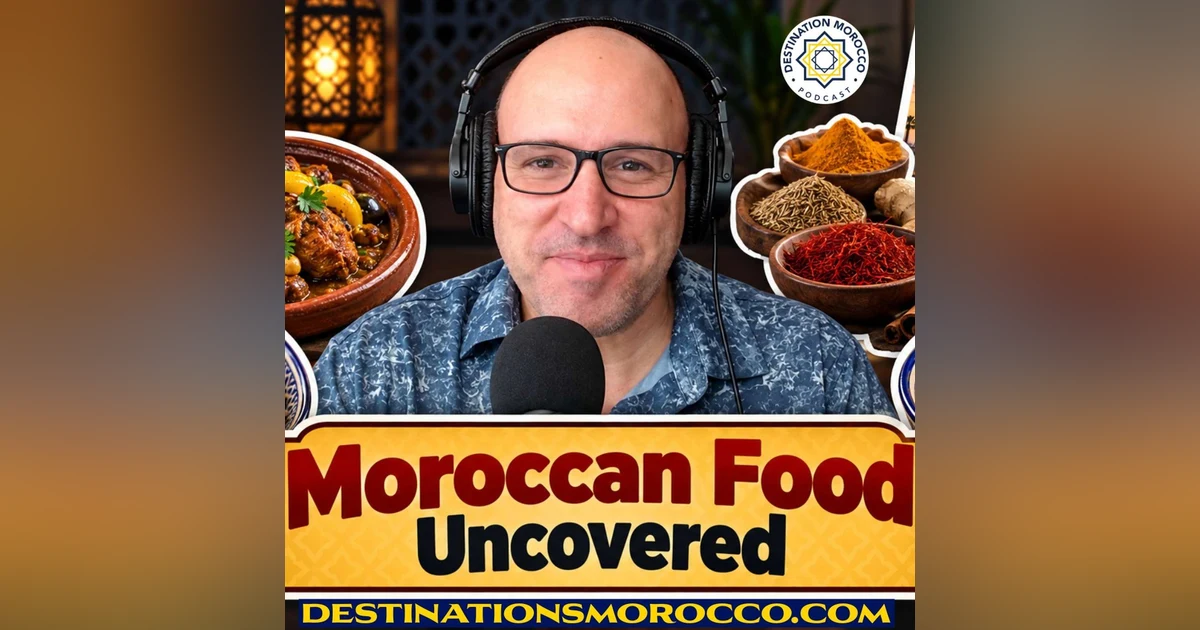

One of our most popular episodes in recent years was Azdean and Ted's overview of popular dishes in Morocco: what they are, what makes them special, the key ingredients and most of all: where and how to order! Some of these you've probably heard of, and others which might be less familiar, but you'll discover them quickly once you arrive. We're putting this episode back out to refresh your taste buds and help in your culinary research of Morocco. Whether travelling on your own or as part of a...
One of our most popular episodes in recent years was Azdean and Ted's overview of popular dishes in Morocco: what they are, what makes them special, the key ingredients and most of all: where and how to order!
Some of these you've probably heard of, and others which might be less familiar, but you'll discover them quickly once you arrive. We're putting this episode back out to refresh your taste buds and help in your culinary research of Morocco. Whether travelling on your own or as part of a tour, you'll learn what dishes to look for, what to ask your guide and why these recipes are important to Moroccan culture and daily life.
This episode is another one which is a bit easier to follow in video form, where you can see the various dishes we're talking about, so hop over to our YouTube channel if you can. But if you're busy driving or jogging, you can still listen along and get the backstories and descriptions!
Some of the highlights:
- Tagine and couscous of course, but Azdean describes the different types of each that you can find, and also shows us the essential spices that define Moroccan cooking.
- Harira, the traditional soup served during Ramadan, rich in flavor and ingredients.
- How Moroccan cooking techniques emphasize marinating and slow cooking for flavor.
- How street food in Marrakesh has improved significantly and is now considered safe, especially in the Jemaa el-Fnaa Square.
- What about dietary restrictions? In this day and age, with tourism booming, restaurants are learning to accommodate different demands and requirements. With each year you can find more and more choice.
- Food tasting tours, what to order for breakfast, what to shop for at home and lots more!
Food is always a popular topic around here, and we're happy to bring back these mouth-watering ideas to share with you!
0:00 Moroccan food and flavor
2:34 Must-try Moroccan dishes
3:55 Tagine: ingredients and cooking
10:58 Couscous and its varieties
13:10 Moroccan spices and flavor
17:11 Harira soup and Ramadan
20:17 Moroccan food-tasting tours
23:27 Street food in Morocco
27:24 Dietary needs, allergies and dining out
29:53 Moroccan ingredients and cooking at home
Ted Cragg (00:02)
So what kind of like, flavors should people look for? What's that? Is there a distinct flavor, you know, to Moroccan food, to maybe your average tagine, you know, that makes it really stand out?
Azdean Elmoustaquim (00:14)
It's the mixture of the spices, the amount that it's mixed, you know, just like a bartender, have to have
Ted Cragg (00:20)
Yeah.
Azdean Elmoustaquim (00:21)
the right amount of everything. You don't want to have one spice, too much of it overpowering the other spices. And that's what makes the flavor really, really tasty.
Welcome, foodie adventurers and culinary curious to Destination Morocco podcast.
If your travel plans are often guided by your taste buds and you believe the best way to understand a culture is through its get ready for a feast. Today, we're diving fork first into the incredible, aromatic Moroccan cuisine. From the bustling food stalls eateries, we are going to explore
what makes Moroccan food so unique and delicious. And joining us to guide this flavorful journey is our expert guide, Ted, the true connoisseur of Moroccan gastronomy. Welcome back to Destination Morocco podcast.
Ted.
Ted Cragg (01:25)
Well, I've been a connoisseur since I went to Morocco, which
Azdean Elmoustaquim (01:27)
you
Ted Cragg (01:28)
is a great place to discover it for sure. I had no idea. Well, we talked about it maybe a bit, but I really didn't have much idea what tagines were and the other things till, of course, we went to try it, which was pretty amazing. So that's what we're going to chat about today.
Azdean Elmoustaquim (01:42)
Perfect.
Ted Cragg (01:43)
Yeah. mean, food comes up on all kinds of episodes for sure that we've done. But I, again, I don't know if we've done a dedicated episode. So.
That's just it really. mean, until, unless you know the food already, and or unless you've been to Morocco, right? And you have some kind of connection like maybe it's hard to kind of grasp exactly what is it tagine and what is couscous made from and stuff like that. yeah, we thought we'd go over some of those questions. Most of these questions, of course, that you've received from people over uh the last little while. So we put it all together here in one episode.
Azdean Elmoustaquim (02:16)
Thank you.
Ted Cragg (02:17)
Yeah. Well, when someone mentions Moroccan cuisine.
I mean, yeah, tagine, couscous, things like that often come to mind. So we can talk about that, but beyond those staples, what are some maybe equally iconic or well-known must-try type dishes that people should look for, should really ask for when they're in Morocco?
Azdean Elmoustaquim (02:39)
Okay, that's a really really good question Ted. Just to give you a little bit of numbers, last year Moroccan cuisine ranked number one internationally and for the last decade or so it has always been ranked probably top five. So the Moroccan cuisine is very diverse but I do agree with you, Tajine and couscous are the most known dishes and in Morocco some dishes are more familiar.
in certain cities or villages or culture or a tribe versus others. So there's so many to try, know, and again, depending on the occasion, depending on if it's a religious, if it's a celebration. So many, many things are different and they change depending on the occasion. So.
Ted Cragg (03:28)
Yeah, well, let's take I'm going to share my screen here for for those who's watching and watching and if you're listening, we'll do our best to describe it here. But just looking at tajines, I mean, what's the best way to kind of summarize? You know, is it would you call it a stew?
Azdean Elmoustaquim (03:45)
It's well, it's similar to a stew with a lot less broth, if you would. And again, when you talk about, you know, the sauce or the broth, ⁓ depending some people like it almost with no sauce. Some people like it with sauce so they can dip in the bread. And you know, the bread in Morocco, the culture is just,
Ted Cragg (04:02)
Yeah.
Azdean Elmoustaquim (04:02)
they feed you bread all the time, anything that we put, it's going to have bread next to it. So these are really, really diverse tajine dishes, if you would. And some are made with
you know, chicken, some are made with, beef, with lamb, with fish. you can make it with anything you really want, uh vegetables only and so forth.
Ted Cragg (04:25)
Okay.
Azdean Elmoustaquim (04:25)
And it varies. There's some dishes that are popular again, like in terms of celebration, like, uh you know, with prunes, with almonds
Ted Cragg (04:35)
yeah.
Azdean Elmoustaquim (04:35)
as decoration, like the one that you see here,
That one, yes. So that
Ted Cragg (04:37)
Here. Okay.
Azdean Elmoustaquim (04:39)
one looks like, know, it's with apricot and prunes. It's
Ted Cragg (04:43)
I see, yeah.
Azdean Elmoustaquim (04:44)
really, really nice. And then next to it, yes, and you can see it, it is chicken. It's made, you know, yeah, I can see it in the title, with prunes and apricot. Yes, it's really, really good. And
Ted Cragg (04:50)
okay yeah of course the prunes and apricots there you go yeah
Azdean Elmoustaquim (04:57)
it's very tasty. This can be just a regular...
day tagine, or it can be an occasion. uh
Ted Cragg (05:01)
Hmm. That's a good question.
Like are these special occasion type dishes or everyday? Yeah
Azdean Elmoustaquim (05:05)
they can be absolutely they can
be in terms of celebration some people you can see there's little bit of decoration or garnish in terms of cilantro I see it in
Ted Cragg (05:13)
yeah.
Azdean Elmoustaquim (05:13)
on top and then some will add you know just roasted peeled almonds on top of it and some will add as well reasons so
Ted Cragg (05:22)
No reason,
Azdean Elmoustaquim (05:22)
yeah so those are just garnishes and and and when you look at the next to it on the left hand side that's a couscous
The same tagine that he just showed yeah, that one is it's a vegetable
Ted Cragg (05:33)
This one here.
Azdean Elmoustaquim (05:34)
tagine This is very traditional and you can see it
Ted Cragg (05:36)
Yeah.
Azdean Elmoustaquim (05:37)
has kind of brown olives uh But it shows here that it's beef So the beef
Ted Cragg (05:39)
Mm-hmm. Yep, slices of vegetables, yeah.
Azdean Elmoustaquim (05:43)
the beef or the lamb is going to be basically underneath the vegetables So this
Ted Cragg (05:47)
Mm-hmm.
Azdean Elmoustaquim (05:47)
is more like for maybe three people, you know uh Yeah, yes,
Ted Cragg (05:52)
Here's good one too. This is vegetarian. Yep
Azdean Elmoustaquim (05:54)
yeah and then
it depends on the city. Sometimes the culture of the city, they have certain type of vegetables. You know, it's very popular, especially in fact, they say the seven vegetables, which means it's very diverse. There's a lot of vegetables, like as you can see here, there's, know, carrots
Ted Cragg (06:09)
Yeah.
Azdean Elmoustaquim (06:11)
is a must. And then you can see uh zucchini squash, the red squash,
Ted Cragg (06:15)
Mm-hmm.
Azdean Elmoustaquim (06:16)
they have eggplant in it. Olives is common. uh Yeah, so it's...
really really delicious
Ted Cragg (06:22)
And what kind of sauce is going on these?
Azdean Elmoustaquim (06:25)
the sauce comes from the ingredients of let's say pull up any tagine uh so
Ted Cragg (06:34)
Yeah, okay, here's the tagine Chicken one.
Azdean Elmoustaquim (06:36)
so this is this is a chicken tagine this is a regular tagine and and it looks
Ted Cragg (06:40)
Yeah.
Azdean Elmoustaquim (06:40)
like maybe I don't know if that's looks kind of greenish I'm not sure what that is but yeah it's kind of weird but
Ted Cragg (06:44)
There's broccoli in there, yeah.
Azdean Elmoustaquim (06:47)
I've never seen broccoli in tajin but then again you can make it your own and whatever
Ted Cragg (06:50)
Sure, yeah.
Azdean Elmoustaquim (06:52)
uh fits you can have it normally there will be onions there will be garlic maybe another but then the spices you add the salt and pepper the cumin the ginger
Ted Cragg (07:06)
yeah.
Azdean Elmoustaquim (07:06)
sometimes they dry parsley or fresh parsley
cilantro sometimes as we saw it it can be used as a garnish or can also be chopped up really really thin inside the dish and then with water paprika then you know some
Ted Cragg (07:19)
Hmm.
Azdean Elmoustaquim (07:19)
you know hot sauce not really hot sauce but if uh hot peppers as well and it depends the ones that are used there's some just regular green ones in the US those that available or you can do jalapenos so just it depends on your
Ted Cragg (07:32)
yeah.
Azdean Elmoustaquim (07:33)
flavor really so that's what really
mix the sauce and then you steam it until
Ted Cragg (07:39)
Hmm.
Azdean Elmoustaquim (07:39)
it gets little bit brownish and just add whatever you need to add to it because certain things in Tajine they cook in different times so sometimes you add everything all at once it in low heat and sometimes you need to add for example potatoes first and then afterwards you add something else because they cook in different times uh
Ted Cragg (08:00)
Now as far as cooking, is it fair to say that this is what makes it a tagine? It's the pot that it's cooked in and the way that that cooks it?
Azdean Elmoustaquim (08:08)
100 % This is, if you look at this pot here, it's very unusual We're we're gonna, yeah, we're gonna leave and
Ted Cragg (08:17)
You can find a different one.
Azdean Elmoustaquim (08:18)
yeah, find a different one Look at the one on top with the tea pot Yep, yep, that one Yes,
Ted Cragg (08:23)
here, yeah, okay.
Azdean Elmoustaquim (08:24)
so this is more like a traditional tajine And you can see this one, I see some olives, I see some lemon uh wedges, maybe chicken
Ted Cragg (08:32)
Yeah, yeah, that's true. Yeah.
Azdean Elmoustaquim (08:36)
So, normally
this is what you would cook it and again, you cover it and you put it on low heat and that's the best way to cook a tagine and cook it for a couple hours, you know, because it's slowly cooked, it's steamed everything and everything,
Ted Cragg (08:52)
Hmm.
Azdean Elmoustaquim (08:52)
all the meat, whatever it's beef or chicken stays juicy and very, very flavorful. That's a really good picture as
Ted Cragg (08:59)
Now remember the thing you said a while back about how the ones you cook with have a hole and the decorative ones don't. Is that right?
Azdean Elmoustaquim (09:04)
That's right. Yes,
that's right. Yeah, because I remember that incident that we had with one of the guests, uh
Ted Cragg (09:10)
Yeah.
Azdean Elmoustaquim (09:11)
she was eating at the restaurant and, know, waitress out of the blue just said, Hey, that's not very bad is fake for no reason or evidence. And she panicked. But anyways, so most of the tagines that you will get here in the U.S., they are for cooking. Most of them.
Ted Cragg (09:27)
Okay.
Azdean Elmoustaquim (09:28)
And you can see
when you look at the lid of this tagine when you lift it up towards the end of it or the top you're going to see a small opening and that's where the steam you know leaves
Ted Cragg (09:37)
Yeah. Okay. So the steam doesn't
come out the hole in the middle. It's this little hole kind of halfway down on the side. Or maybe both. Yeah.
Azdean Elmoustaquim (09:45)
It's actually close to what you have right there, yes.
So that's where the steam comes out. And it's
Ted Cragg (09:52)
Right.
Azdean Elmoustaquim (09:52)
very slow uh steam cooker if you would. So very
Ted Cragg (09:56)
Yeah, yeah.
Azdean Elmoustaquim (09:56)
low heat. And the ones that are just for decoration, they'll be looking just like this or some are really, really fancy with a different ceramic made different clay if you would. But then they will not have that opening on top.
which means that you cannot really put it in the oven or cook with it however you can still serve food in it and it's still just perfectly fine so
Ted Cragg (10:19)
Yeah, okay.
Azdean Elmoustaquim (10:20)
that's the only difference you cannot put it into a hot oven or a stove but you
Ted Cragg (10:25)
Hmm
Azdean Elmoustaquim (10:26)
can still serve the food even the food is hot you could still do it if it's yeah cold or salads that's fine too
Ted Cragg (10:31)
Mm-hmm. Yeah. saw a picture of some nice couscous here. Maybe this is a good one. Is that that's some good. That's quinoa. Yeah, that's kind of. Maybe.
Azdean Elmoustaquim (10:37)
That's quinoa. I think it looks like, yeah, it says couscous, but yeah, it is couscous. That one is couscous.
Couscous, can be made, you know, in vegetables. And again, it's completely up to you in terms of vegetables. Normally there's carrots, eggplant, and there's different type of eggplant and different cuts of eggplant. Some they just use the small eggplant as a whole.
and some they just cut it into small pieces if the eggplant is big.
Then you have the zucchinis, then you have, you can do zucchini, can do red squash. You can do veggies. It's completely
Ted Cragg (11:10)
Hmm.
Azdean Elmoustaquim (11:10)
up to you. And there's a
Ted Cragg (11:11)
Yeah.
Azdean Elmoustaquim (11:12)
different way of making the traditional Moroccan couscous versus just regular cooking.
Ted Cragg (11:20)
Now, are there different
types of couscous in the sense there's different types of rice, know, white rice, brown rice, all that?
Azdean Elmoustaquim (11:24)
Yes,
you're absolutely right. That's a really really good question. just regular couscous which is just... But then there's couscous that is made out of wheat grains and it's
Ted Cragg (11:37)
Yeah.
Azdean Elmoustaquim (11:37)
a little bit different. The texture is different, the look is different. It looks a little bit brownish, darker color versus lighter color of the
Ted Cragg (11:46)
Yeah.
Azdean Elmoustaquim (11:46)
regular couscous. The taste is different.
So if you look at this one,
You see, this one has cabbage. And cabbage is really, really popular as well. So the one
Ted Cragg (11:56)
Oh yeah.
Azdean Elmoustaquim (11:58)
next to it in front of us, that looks like carrot. And then
Ted Cragg (12:02)
Right?
Azdean Elmoustaquim (12:03)
you can see some chickpeas next to it, in between those two. Yeah, there's
Ted Cragg (12:06)
Oh, yeah.
Azdean Elmoustaquim (12:07)
a chickpea. Then is...
forgot the name in English but the next one is the eggplant that's what I was talking about yes and then on top you can see the zucchinis you can see uh all kind of things and the meat as well or this one it says
Ted Cragg (12:21)
Yeah, it's underneath there.
Azdean Elmoustaquim (12:22)
seven vegetables so yeah which is really really nice so this one is just the regular couscous it's not uh the wheat couscous or the barley this one will be kind of smooth if you would
Ted Cragg (12:34)
Okay.
Azdean Elmoustaquim (12:34)
The other
one is kind of a little bit, you can feel it's very different, probably a little bit,
Ted Cragg (12:39)
Texture.
Azdean Elmoustaquim (12:40)
uh, textured, yes, a little bit dry, a little bit harder. So, but this is the most popular.
Ted Cragg (12:43)
And what's like regular couscous made from?
Azdean Elmoustaquim (12:46)
let me see. Sumerlina? Yeah. Sumerlina. I think.
Ted Cragg (12:48)
O spirulina isn't it is that it? Sumerlina
Azdean Elmoustaquim (12:52)
Yeah.
Ted Cragg (12:52)
Yeah, OK.
Cool. Okay. So let's uh talk about spices too. um You know, spices and aromas. Are there essential spices that define Moroccan cooking? Are there spices that only appears, if you know, in Moroccan cooking? We can find some of those.
Azdean Elmoustaquim (13:12)
That's a really good question. That question really changed I would say in last few years because there's a certain formula that say hey this one goes with this, this one goes with the fish, this one goes with the beef, this
Ted Cragg (13:25)
Yeah.
Azdean Elmoustaquim (13:25)
one goes with the chicken but now it doesn't really matter it's up to you in terms of the flavor but then you have the stables obviously you know salt, pepper cumin is definitely a must in a lot of the dishes uh ginger as well saffron
is definitely a must. um Paprika or you know back home we don't call it really paprika but uh it's it has a different name but that's the equivalent to it. And sometimes we do uh you know if you like it spicy then we just add something spicy you know like a spicy pepper if you would.
Ted Cragg (14:02)
Okay.
Azdean Elmoustaquim (14:03)
So yeah.
Ted Cragg (14:04)
Now when you see something like this, this maybe is more of a North American thing, but still they talk about, I've seen this a lot, know, you get your Moroccan spice rub or something. Do you know generally offhand what spices would be in that?
Azdean Elmoustaquim (14:16)
I honestly wouldn't. Yeah, it's different. Yes. Yeah, it's different.
Ted Cragg (14:18)
because it's different everywhere depending who's put it together maybe they'll tell us here
Azdean Elmoustaquim (14:24)
Yeah, you're right.
And again, if it's for meat, if it's for chicken, it's
Ted Cragg (14:28)
Okay.
Azdean Elmoustaquim (14:29)
different. But then if you look at this list on the right hand side, that's really good.
Ted Cragg (14:33)
So here's a good list, got brown or coconut sugar, paprika, cumin, cinnamon, ginger, cloves, salt, pepper,
Azdean Elmoustaquim (14:40)
Yes.
Ted Cragg (14:41)
and cayenne. And of course they're all ground up.
Azdean Elmoustaquim (14:43)
Yes.
Ted Cragg (14:44)
So you're not using a full clove, you're using the cloves ground up as an example.
Azdean Elmoustaquim (14:48)
Yes, yeah. The brown and
coconut sugar, that's very rare. It depends
Ted Cragg (14:55)
yeah.
Azdean Elmoustaquim (14:55)
what you're using it for, but it's not really common in terms of, you know, daily use. So the rest of it is very accurate, yes.
Ted Cragg (15:04)
Hmm. Interesting. So what kind of like, I guess, flavors should people look for? What's that? Is there a distinct flavor, you know, to Moroccan food, to maybe your average tagine, you know, that makes it really stand out?
Azdean Elmoustaquim (15:21)
It's the mixture of the spices, the amount that it's mixed, you know, just like a bartender, have to have
Ted Cragg (15:27)
Yeah.
Azdean Elmoustaquim (15:27)
the right amount of everything. You don't want to have one spice, you know, too much of it overpowering the other spices. And that's what makes the flavor really, really uh tasty. And also
Ted Cragg (15:38)
Mm-hmm.
Azdean Elmoustaquim (15:40)
the way of cooking it, because when you're cooking it, you want to give it its time. You know,
Ted Cragg (15:45)
Oh yeah.
Azdean Elmoustaquim (15:45)
there's a process, for example.
you know, with the chicken, if we take an example of the chicken, ideal to have it at least cleaned, completely cleaned and marinated for a minimum of 24 hours. So you let it sit in all those spices. So it absorbs all those uh ingredients. The other thing that we forgot is uh lemon juice. Lemon juice, especially
Ted Cragg (16:09)
yeah.
Azdean Elmoustaquim (16:10)
with the chicken. And then you have as decoration and also uh
it adds to the flavor which is lemon uh peel, uh is preserved lemon peel which is very very flavorful and that takes a couple of months with the process how to make it to have really really nice lemon peels to add to your dish
Ted Cragg (16:33)
Mm-hmm.
Azdean Elmoustaquim (16:33)
so uh again it's the way that you cook it know sometimes
Saffron is a must because it adds to the flavor. Sometimes it's not needed depending on the dish that you're making and it does make a huge difference.
Ted Cragg (16:47)
Yeah,
for sure. Interesting.
Now I got to bring this up. Harira soup. Do you
Azdean Elmoustaquim (16:58)
Yes.
Ted Cragg (16:59)
have to ask for it really? Because if I remember, they pretty much serve it all the time. So what is Harira and where can people expect to get it?
Azdean Elmoustaquim (17:08)
Okay, that's a really good question. Ted, if you can pull one up so the audience can see it, and there are really different pictures here. That one is a good one. Yes. So
Ted Cragg (17:14)
Yeah, maybe this one here. It's got chickpeas, lentils.
Azdean Elmoustaquim (17:19)
this one, it's not gonna normally look like this, but if you ask me, this soup, the bowl of soup was just picked up all the way from the bottom of the jar, if you will, because uh it's supposed to be very juicy.
like running like that one
Ted Cragg (17:35)
Okay.
Azdean Elmoustaquim (17:37)
the reason because
Ted Cragg (17:37)
Aha.
Azdean Elmoustaquim (17:37)
I wanted you to show this because it's it's it's very important this is more like it you can still see the chickpeas you can still see you I forgot the name of uh charia
and it's garnished with, some people they garnish it with the lemon wedge on the side. And now it's very popular. This one, Harira, is very specific to Ramadan. That's what it serves
Ted Cragg (17:57)
yeah, that's right.
Azdean Elmoustaquim (17:58)
when you go to houses or somebody invites you. it's a stable. It's a must.
Ted Cragg (18:02)
Yeah.
Azdean Elmoustaquim (18:03)
It's in all the tables when it's the time to break their fast. So this is what we
Harira for Ramadan because it is specific to that Ramadan period of every year. Now it depends on the city with the culture and everything. Now it is served outside Ramadan almost every day and in a lot of places they serve it in dinners like when you go to a coffee shop you can order Harira and they'll serve it to you just like this some
will have a lemon wedge to the side depending on what city you're in if it's Chefchaouen and if it's Agadir, if it's Ma'arakash and some will have ⁓ a boiled egg next to it and as you can see here this is really accurate it was a date and some halwa Shabakia that's yeah, yeah so you can see the date on the right hand side ⁓ yep and then next to it Shabakia yes
Ted Cragg (18:51)
Yeah, yeah, that's And shabekki as the sesame dessert.
Azdean Elmoustaquim (18:59)
and the Shabakia again these are all Ramadan
sweets if you would
Ted Cragg (19:04)
Hmm.
Azdean Elmoustaquim (19:04)
and again this is is a perfect example right here depending on the region you can see uh it shows this is a lentil soup but it's very you know if the harira the ramadan harira were served you can see the lemon wedge you can see here some figs dry figs and in
Ted Cragg (19:17)
Yeah. Okay.
Azdean Elmoustaquim (19:19)
the next to it you can see uh a half boiled egg as well and again it just it depends on the region where you're getting it the market the street food so it's served in different ways
So this one looks a little different but again you can see the lentils you can see the garnish the cilantro but it's not juicy because I say juicy or not juicy because it is supposed to have more juice than uh everything
Ted Cragg (19:48)
Right.
Azdean Elmoustaquim (19:48)
you see here is supposed to be into the bottom of the soup so yeah it's
Ted Cragg (19:53)
yeah, it does seem a lot thicker.
Azdean Elmoustaquim (19:54)
a lot thicker
Ted Cragg (19:55)
But the point is that you can get it year round, right?
Azdean Elmoustaquim (19:58)
Yes, absolutely yes.
Ted Cragg (20:00)
And if you want to do can, here's a question. Can you do kind of a Harira food tour in the sense of sampling different types of it, right? In different cities.
Azdean Elmoustaquim (20:09)
that's a good question. Yes, you can do this is very interesting because we did this one in Marrakesh and it can be done in literally all the major series. First is highly recommended as well. uh The food tasting tour and there's three types. There's one that you do in the morning. There's one that you do during lunch and there's one that you do late afternoon and it extended it extends to to around maybe nine, 10 p.m. and it's considered dinner. So when you do the one in breakfast,
A lot of people will not do this one because their breakfast is already included at the Riyadh hotel. So we rarely do those. But they
Ted Cragg (20:48)
I see ya.
Azdean Elmoustaquim (20:49)
breakfast tours and they'll take you to the Medina, the old downtown, whether it's in Fes, whether it's in Chefchaouen and whether it's in Marrakech And you'll see the dishes that are normally associated with Moroccan breakfast.
You'll see the eggs in the tagine you'll see the delicacies that we serve. And you really have to have a tough stomach for those type of things. Then you
Ted Cragg (21:11)
Yeah.
Azdean Elmoustaquim (21:12)
see bisara, which is really, really good as well. And olive oil and black olives. Then you see honey. We serve honey quite a bit in breakfast.
Ted Cragg (21:22)
Yeah, yeah.
Azdean Elmoustaquim (21:23)
And semmen as well. So there's a lot of dishes that it includes in the breakfast tour. And you can just sample.
from place to place to place and each place has its own specific dish that they are really known for, they are really good uh at. So, and that should take, I would say, maybe two and a half hours or so. This is for the breakfast. So you're just going from stall to stall and place to place and sampling the breakfast menu, if you would. Then the one for lunch, it is popular as well. And then you do the same thing, but it's going to be a lunch menu.
And again, uh it depends on how strong your stomach is. There are going to be a lot of delicacies. uh May not be for everyone, you'll have your couscous, you'll have your tagine, you'll have the beef, the lamb, and a lot of delicacies. If you want to taste them, you can. uh If not, you just skip them. Then the dinner, uh which is good as well. uh I like the dinner because
And we did it in Jem Elfna Square because you see the change in the square. Jem
Ted Cragg (22:28)
Yeah.
Azdean Elmoustaquim (22:28)
Elfna becomes alive depending on the time of the day, the year, right before the sunset. mean, we started, I think, around five o'clock. And that's when everybody started to get ready in terms of the performance in the square, in terms of
Ted Cragg (22:42)
Hmm.
Azdean Elmoustaquim (22:42)
the stalls in the square. start setting up their little shops and stuff. uh And was very interesting and it was absolutely worth it.
and recommended.
Ted Cragg (22:52)
Yeah, yeah.
Azdean Elmoustaquim (22:53)
And then we ended up at a place where we had the Harira as well. And you can see it in
Ted Cragg (22:57)
Okay.
Azdean Elmoustaquim (22:57)
some of the posts that we have our guide Ahmed. He did a really, really good job with the msemen as well. in terms of food tasting tours, they're really, really popular and highly recommended.
Ted Cragg (23:08)
Yeah,
me. Now that leads into street food. So how can people sample street food safely and deliciously too, but mostly safely?
Azdean Elmoustaquim (23:17)
That's a really good question.
I'll speak a little bit more about Marrakesh.
Ted Cragg (23:21)
Sure.
Azdean Elmoustaquim (23:22)
I don't want to sound biased, but I am from Marrakesh. Marrakesh has the best street food in the nation right
Ted Cragg (23:27)
you
Azdean Elmoustaquim (23:28)
now. And that has changed, I would say, in last decade. The street food in Marrakesh was terrible growing
Ted Cragg (23:36)
Mm.
Azdean Elmoustaquim (23:36)
up. eat it, if you don't have a really good, strong stomach, even for locals,
Ted Cragg (23:42)
Yeah.
Azdean Elmoustaquim (23:42)
it
will get you sick. If you don't go to the square and eat in the square almost once a month or so, that food will make you sick. The taste was terrible, but You know tourism being the you know very big in Morocco and so many changes the restrictions, now ⁓ I highly recommend the street food in Marrakesh, especially Jema el-Fnaa. Because it's very
Ted Cragg (24:03)
Okay, yeah.
Azdean Elmoustaquim (24:04)
safe. It's really really good. It has changed completely into the best
possible way for me. Because I remember, you know, having chicken comparing it to what we have at home. There's no comparison in terms of, you know, tenderness and juiciness, even texture, flavor. Just it's completely different. Now it's it's it's definitely worth it and I highly recommend it. When you look at street food, definitely Fes. Each city has its own amazing street food. We've had it in Tangier. We've had it in Essaouira, in Fes. Chefchaouen. It's it's really, really, really incredible.
Now the only advantage that Marrakesh has is the square and they have literally everything in one place but then there's other street food everywhere else you go in Marrakesh but Jamal if you would is really the hub for street food and it's very diverse that anything you can think of and they eat all parts of the animal nothing really goes to waste if you would that's when we talk about delicacies and again it's not for everyone so
Ted Cragg (25:05)
Well, how do know that it's safe and that they're following hygienic stuff?
Azdean Elmoustaquim (25:10)
because they
have doctors, have checkups all the time. also the local, let's say when you look at Jemaa el-Fnaa the whole square is under camera, then the police station is right there, so just a few steps
Ted Cragg (25:28)
Okay.
Azdean Elmoustaquim (25:28)
away. And tourists are very important to Morocco.
and the violations are you can lose your license so nobody wants to take that chance.
Ted Cragg (25:38)
Like if their food isn't safe?
Azdean Elmoustaquim (25:39)
Yeah if their food isn't safe you know you'll get a penalty then a penalty then you need to leave that spot for somebody else you know yeah.
Ted Cragg (25:48)
So do
they have inspectors that come to the food stalls?
Azdean Elmoustaquim (25:49)
Yeah, they do. They do
have inspectors just like, you know, secret choppers. They do have inspectors
Ted Cragg (25:54)
Bye.
Azdean Elmoustaquim (25:55)
and they just don't inspect just the food but also make sure that everybody's charged the right amount because I remember we talked
Ted Cragg (26:00)
Bye.
Azdean Elmoustaquim (26:01)
about it couple years ago. was a couple from England visiting Morocco and they ate, you know, just something normally would cost probably 20 US dollars for dinner, but they were handed a bill of $500.
They didn't say anything, they just paid it and took the receipts. They just walked
Ted Cragg (26:20)
Yeah.
Azdean Elmoustaquim (26:21)
to the police station and that guy just, you know, in deep trouble. yeah, they're
Ted Cragg (26:26)
Wow.
Azdean Elmoustaquim (26:27)
very serious when it comes to tourists and more.
Ted Cragg (26:30)
Yeah, that's good. Hmm. All right. Well, last thing I want to cover here, at least in this episode, we can certainly do lots more about food, I'm sure, but at least a bit of an overview here. But what about dietary restrictions and allergies? You you talk a lot about bread, for instance, but if you're gluten free, you know, is there any way around that? And just in general, um how do they have kind of systems, you know, accommodations in place for people, dietary restrictions, generally speaking?
Azdean Elmoustaquim (26:59)
Yes, they do. And we do get those requests all the time and we accommodate them all the time. So and the good thing is, you know, the travelers, they let us know ahead of time. So we we make sure in every stop uh they are served the right food. So there's no no sickness, no allergies to anything. if it's gluten free, if it's just vegetarian dishes and stuff like that. Yeah. So
Ted Cragg (27:23)
Okay.
Azdean Elmoustaquim (27:24)
yeah. And also when you go to restaurants on your own,
Just ask. just ask.
Ted Cragg (27:29)
Mm-hmm.
Azdean Elmoustaquim (27:29)
If you cannot ask right away, just make an arrangement. Check with them ahead of time. Say, hey, I'm going to be there in three days. Will I be able to find something vegetarian or gluten free? Or I have allergic to this. it be safe for me to eat at your restaurant? So it's always good
Ted Cragg (27:46)
Mm-hmm.
Azdean Elmoustaquim (27:46)
to check ahead if you're traveling on your own. If you're coming with us, then we do the checking for you and we make the reservation booking for you.
Ted Cragg (27:54)
Yeah, exactly. then, I mean, more touristy it gets, the more likely they'll speak English. if you
Azdean Elmoustaquim (28:00)
Yes.
Ted Cragg (28:00)
have a guide, you know, they're there to help translate a course if that's an issue, too.
Azdean Elmoustaquim (28:06)
Absolutely, absolutely. That's why guides are really, important on the tour.
Ted Cragg (28:10)
Oh yeah. Good. All right. Well, that's a good overview. As I say, I'm sure we'll be back talking more about some different kinds of dishes. There's always lots to cover. So, but yeah, it's a very, very popular topic and absolutely one of the highlights of Morocco is trying some different foods. So it's one of the best reasons to go.
Azdean Elmoustaquim (28:27)
Thank you, thank you. I completely agree. I'm biased.
Ted Cragg (28:31)
Yeah.
You get to eat it all the time at home, right? Because your wife. Yeah.
Azdean Elmoustaquim (28:34)
I know, I know. I'm very spoiled. I mean, I'm very grateful and you know, it's
so funny because I remember coming to the US one of my neighbors back home, you know, they helped me come to the US actually. So when she invites us and we have couscous and was like, oh my God, I didn't think I was going to have couscous until I go back to Morocco, but it's just, it's a really, really nice treat. So it's
Ted Cragg (28:57)
Yeah.
Azdean Elmoustaquim (28:57)
just, it's amazing.
Ted Cragg (28:59)
Do you find it, uh, you can get fairly accurate, authentic ingredients in Houston? Were you there?
Azdean Elmoustaquim (29:05)
I would say probably 80 % but we do bring them from back home. Yeah,
Ted Cragg (29:11)
Sure.
Azdean Elmoustaquim (29:13)
the taste is different. And that's a really good question by the way, Ted. The reason is because here everything is kind of grinded and pre-made but back home we bring the, we don't crush the grains. So we just
Ted Cragg (29:25)
Okay, ready?
Azdean Elmoustaquim (29:26)
crush them if we need to use for a month or so that's the...
we crush that amount needed but the other thing is
Ted Cragg (29:31)
Yeah, yeah, so it's more fresh.
Azdean Elmoustaquim (29:33)
yeah that way it is more fresh and then we go to it's kind of a Pakistani indie place and that's where we get most of the spices here as well the ones that we need yeah
Ted Cragg (29:45)
Yeah, interesting. That's a point then if people are interested in doing some Moroccan cooking at home, know, especially if you've been and you want to replicate you
Azdean Elmoustaquim (29:49)
Yeah. Yes.
Ted Cragg (29:52)
may not find a Moroccan market per se, but a lot of the East Indian and maybe general African markets, I suppose, could have some of those places. Yeah. Cool. All right.
Azdean Elmoustaquim (30:01)
Absolutely, Awesome.
Ted Cragg (30:05)
So, yeah, we'll be back again with another episode soon, but this is been fun.
Azdean Elmoustaquim (30:09)
Thank you so much, really really appreciate it. Thank you. Bye bye.
Ted Cragg (30:12)
Cheers.